Wednesday, April 20, 2016

Technology Innovations for Your Library


Today’s hottest web and mobile technologies are offering libraries a new world of opportunities to engage patrons. Ultra-popular social media websites and apps combined with the availability of affordable cloud-based services and the evolution and adoption of mobile devices are enabling librarians to share and build communities, store and analyze large collections of data, create digital collections, and access information and services in ways never thought about before.

But there is just one question.. How?
It’s not enough to simply redesign the library website. Libraries need to start thinking beyond blogs and start diving into the rich IT content knocking on the doors of libraries. 
Here are 10 ideas for you to leverage today’s most innovative tools and techniques. All of these come straight from The Tech Set #11–20 series.

  1. Host a cloud-based collection


  • Libraries are going digital, thus putting a strain on their already tight virtual storage abilities. 
  • Multimedia collections demand extraordinary precautions to ensure their integrity and preservation (It isn't as easy storing digital content as it seems).
  • Libraries need to provide as much protection for digital object files as possible. Two options are Amazon’s S3 with Amazon CloudFront and DuraSpace’sDuraCloud service.

                  Create a Basic Mobile Website

  • Winksite is an easy-to-use tool that can create a mobile site using an RSS feed from a WordPress content management system, platforms librarians are most likely familiar with already. 
  • The site is free and allows five mobile sites for each user account. Dashboard views and form wizards guide you through the setup of your site. The dashboard features many options for creating different mobile page views and customization. 
  • You can add your library logo, adjust the header colors to resemble your desktop library website, or upload a background image to replace the default white page background.

Start a Location-Based Photo Stream with Instagram


  • Instagram claims more than 80 million registered users who have shared nearly 4 billion photos and their photo's locations. 
  • Libraries can expand social media campaigns and create a visual narrative around events, displays, collections, or projects. For a start, library staff can encourage patrons to snap photos of the library building and their friends at the library with Instagram.
  • Establish hashtags so you can gather a photo-stream from library staff and users around a theme, such as local history or a campus research project. 

Use Crowdsourcing to Create a Collection
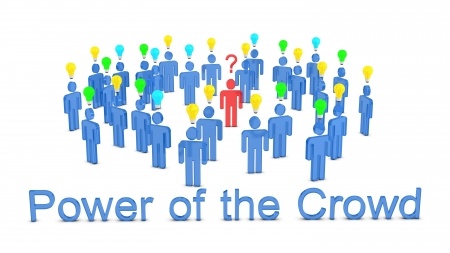

  • Crowdsourcing can be used as a great tool for archiving. For instance, that is how the New York Public Library has transcribed and categorized all of the menus in its extensive collection of historical restaurant menus. The What’s on the Menu?” site encourages visitors to help transcribe dish descriptions on menus into a database. 

Use Google Voice to Implement Text Reference


  • Patrons love to text, so why not allow them to text in their reference questions to your library?
  • Google Voice gives you a single phone number that rings all your phones, saves your voicemail online, transcribes your voicemail to text, and allows you to send free text messages. 
  • Simply enter the recipient’s phone number, type your message, and click “send.” You can use the service to reply by text message to a voicemail, call, or text. 
  • Patrons can respond to your text from their phone, and you can respond from your Google Voice account and browser. Only one librarian can be logged in to the Google Voice account at a time. You can configure LibraryH3lp to route text messages through its interface, where librarians can respond as they would to any other message.

All in all, the big take away from this blog is that technology is out there that can pinpoint specific areas of librarianship that are currently struggling. In the examples above, the use of advanced technology actually brings patrons into the library, and encourages them to actively participate in collection development, and allows their voice to be heard in a way it never has been able to before. So don't be scared of technology, it is there to help us librarians and patrons out to make our libraries even better!


Monday, April 18, 2016

Are School Librarians Still Important?

With books being cleared out of the library, folks wondered back in 2009, what would happen to the person in charge of the room? Would librarians, now called media specialists, be phased out too, replaced, so to speak, with that six-letter noun/verb Google?


No!


They may be an administrator's most underutilized resource. Learn how schools are freeing them up to help students, faculty, and principals find the information they need.


For a while, the forces seemed aligned to make this happen. The widespread recession hit school budgets and libraries especially hard. Simultaneously, Apple came out with the iPad and more and more schools opted for bringing-your-own-device programs to connect students directly with their digital resource of choice, whether in the library, classroom, or hallway. 

But a funny thing seems to be happening to librarians on the way to extinction. The savviest districts and librarians are remaking the position, breaking media specialists out of the library and bringing them into the classroom to help with projects and research-basically, the same skills that used to be cultivated in the quiet of the library. Let's look at the example below to see how today's librarian has indeed evolved from the past "librarian" and into a dynamic, ever-changing school superhero. 


Today's Model
Robyn Young could be example ­number one of the new type of librarian. In her 12 years, she has never shelved a book. She rarely helps students check out materials. Furthermore, the principal of the high school where she works encourages her to move about the school building freely, regardless of the bell schedule.

"The librarian is a different position," says Mike Swank, principal of Avon High School, near Indianapolis. "It serves a different purpose. She's got to have the flexibility to work with the rest of the staff, to share research and best practices."


The more robust the library ­program, the better students do academically. Not only that, but a credentialed teacher-librarian can become another instructional leader in the building and a go-to resource for the principal.

"A lot of the librarian's practice ends up in the classrooms," Swank says. "You might think that the success of a class is all to do with the teacher, but a lot of the support comes from the media center." 

Proof in the Numbers
The link between strong school library programs and student achievement is well documented. Over the past 20 years, numerous studies have shown that elementary schools with at least one full-time certified teacher-librarian performed better on state tests. In a 2010 study conducted in Colorado, more children scored "proficient" or "advanced" in reading in schools with a full-time, credentialed librarian than those without. 


The problem, librarians say, is that few administrators know precisely what they do these days. Many still hold on to the outdated stereotype of the librarian from their own school days-the one who shushed you on your first step into the library-and remain unaware of the potential resource at their disposal. As a result, these leaders are unlikely to go to bat to support librarians in their work or to invest in a strong program.

 "As certified librarians with a master's degree, our focus is on teaching our students," says Young. "If a principal understands that, that's a huge hurdle [overcome] right there." Breaking the stereotype of librarians just shelving books is the biggest glass ceiling that needs to be shattered throughout American schools. 

There are a lot of administrators who believe that the best way to manage staff is to make sure they are in front of 20 to 30 kids all day long, but this is not the case in the collaborative environment of a library. The librarian needs to integrate with everyone, students, teachers, administration, etc.

Equal Access
Strong library programs have the potential to help close the achievement gap for students who live at or below the poverty line. To make room for more library services, teachers nation-wide have agreed to give up their weekly prep periods and continue to have flexible planning time in the mornings with other teachers and librarians. This allows the librarian to collaborate with teachers and lead special lessons on how to use the library both in its physical space and in the classroom. 

All in all, librarians absolutely do matter, but their roles have changed. Long ago is the day where librarians stay in the library all day, waiting for students to come through the doors. Rather librarians are truly showing all of their skills and spreading their wings throughout the school itself, reaching out to students instead of taking their historically passive role. 


Thursday, April 14, 2016

Happy National Library Week!

It's the most wonderful time of year... for libraries at least!


For it's...

National Library Week!!!!!!


This year's National Library Week theme is: Libraries Transform. The theme is meant to serve as a reminder that libraries are not just what they have for people, but what they also do for as well as with people.


With technology become increasingly relevant in today's libraries, they not only are a place to check out books, but also serve as a place to possibly use a 3-d printer, edit a video, or use software such as music recording and production. Technology training is also an essential part of the backbone of library services in the Web 2.0 era. Libraries today also serve as the meeting place for groups and hobbies, due to the shift of their physical spaces being more of an information commons space.

But National Library week is not meant to just to show you of the ways libraries are helping patrons and tranforming lives, it is also meant to be celebrated! Here are a couple of ways you can help to celebrate National Library week at your own library:


  • Go and visit your library

    • This may be an obvious one, but libraries across the nation are hosting celebratory events this week, so go check it out!

  • Show Your Support on Social Media

    • Libraries are becoming increasingly more prominent and popular on social media platforms. Use your own social media accounts to share your love for the library. It serves as a free promotion for your local library and invites more patrons in. 
    • This week use the hashtags: #NWL16 and #LibrariesTransform to be apart of the national campaign of library appreciation. Also, follow "I Love Libraries" on Facebook to see how libraries nationwide are participating!

  • Create your own statement

    • During National Library Week we're asking you to create your own Because Statement. Just fill in the blank telling us why libraries matter to you or your community. One randomly selected winner will receive a $100 gift card and a copy of "Secret Coders," by Mike Holmes and Gene Luen Yang, our National Library Week Honorary Chair.

However you decide to celebrate is up to you, but be sure to in some way show your appreciation for your library, and all of the services it provides to you and your community! Libraries Rule!